
New to Medicare
- What is Original Medicare
- Turning 65 and Retired
- Turning 65 and still working
- What is IRMA?
What is Original Medicare
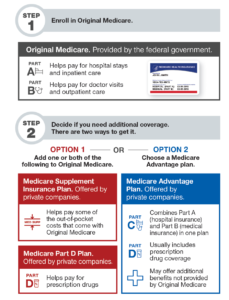
Medicare is a federal health insurance program for people age 65 and older, and for certain younger individuals with disabilities or specific medical conditions. It helps cover hospital care, medical services, and prescription drugs through different parts of the program (Parts A, B, C, and D), with options to add supplemental coverage depending on your needs.
Medicare Part A:
Medicare Part A is hospital insurance that helps cover inpatient hospital stays, skilled nursing facility care, hospice care, and some home health services. Most people do not pay a premium for Part A if they or their spouse paid Medicare taxes while working.
Medicare Part B:
Medicare Part B is medical insurance that helps cover doctor visits, outpatient care, preventive services, durable medical equipment, and some home health services. Part B usually requires a monthly premium and typically covers about 80% of approved costs after the deductible, with the beneficiary responsible for the remaining 20%.
Medicare Part C:
Medicare Part C, also called Medicare Advantage, is offered by private insurance companies approved by Medicare. These plans combine Part A and Part B coverage and often include additional benefits such as prescription drug coverage and wellness programs. Members must continue to pay their Part B premium and follow the plan’s network and rules
Medicare Part D:
Medicare Part D is prescription drug coverage offered by private insurance companies approved by Medicare. It helps cover the cost of prescription medications and is available as a standalone plan or included in some Medicare Advantage plans. Costs and covered drugs vary by plan, so it’s important to review your medications and plan options each year.
Turning 65 and retired
When should I sign up?
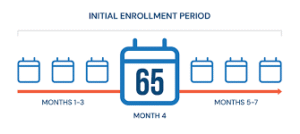
- You can sign up 3 months before you turn 65, your birthday month and 3 months after your birthday month. This gives you 7 months!!
- If your birthday falls on the first of the month, you can sign up 4 months prior to your birthday but will have only 2 months after your birthday, still making this a 7 month timeline.
Where do I sign up?
- Already Collecting Social Security Benefits: If you are collecting social security benefits, you will automatically be signed up for Part A and Part of Original Medicare.
- You are not collecting Social Security Benefits: If you are not collecting social security benefits, enroll online: SSA Portal

Turning 65 and still working
Are you enrolled in credible insurance?
Creditable coverage is health insurance from an employer or union that is considered as good as, or better than, Medicare. If you are turning 65 and still working and have creditable employer coverage, you may be able to delay enrolling in Medicare Part B or Part D without facing late enrollment penalties, as long as the coverage meets Medicare’s standards.
Should I activate Part A
If you are still working at age 65, most people should enroll in Medicare Part A, especially if it is premium-free. Part A can work alongside your employer health plan and usually does not cost you anything.
When you might delay Part A:
If you contribute to a Health Savings Account (HSA). Enrolling in any part of Medicare (including Part A) makes you ineligible to contribute to an HSA, and you should stop HSA contributions 6 months before Medicare starts.
Retiring or losing employer coverage
A Special Enrollment Period (SEP) lets you sign up for Medicare without penalty if you retire or lose employer health coverage. You typically have 8 months from the date your coverage ends or you stop working to enroll in Part B and/or Part D.
What is IRMAA?
IRMAA (Income-Related Monthly Adjustment Amount) is an extra Medicare premium that higher-income beneficiaries pay for Part B and sometimes Part D, based on their income from two years prior. It ensures those with higher income contribute more toward Medicare costs.
How it works
The Social Security Administration (SSA) reviews your tax return from two years ago to determine your income.
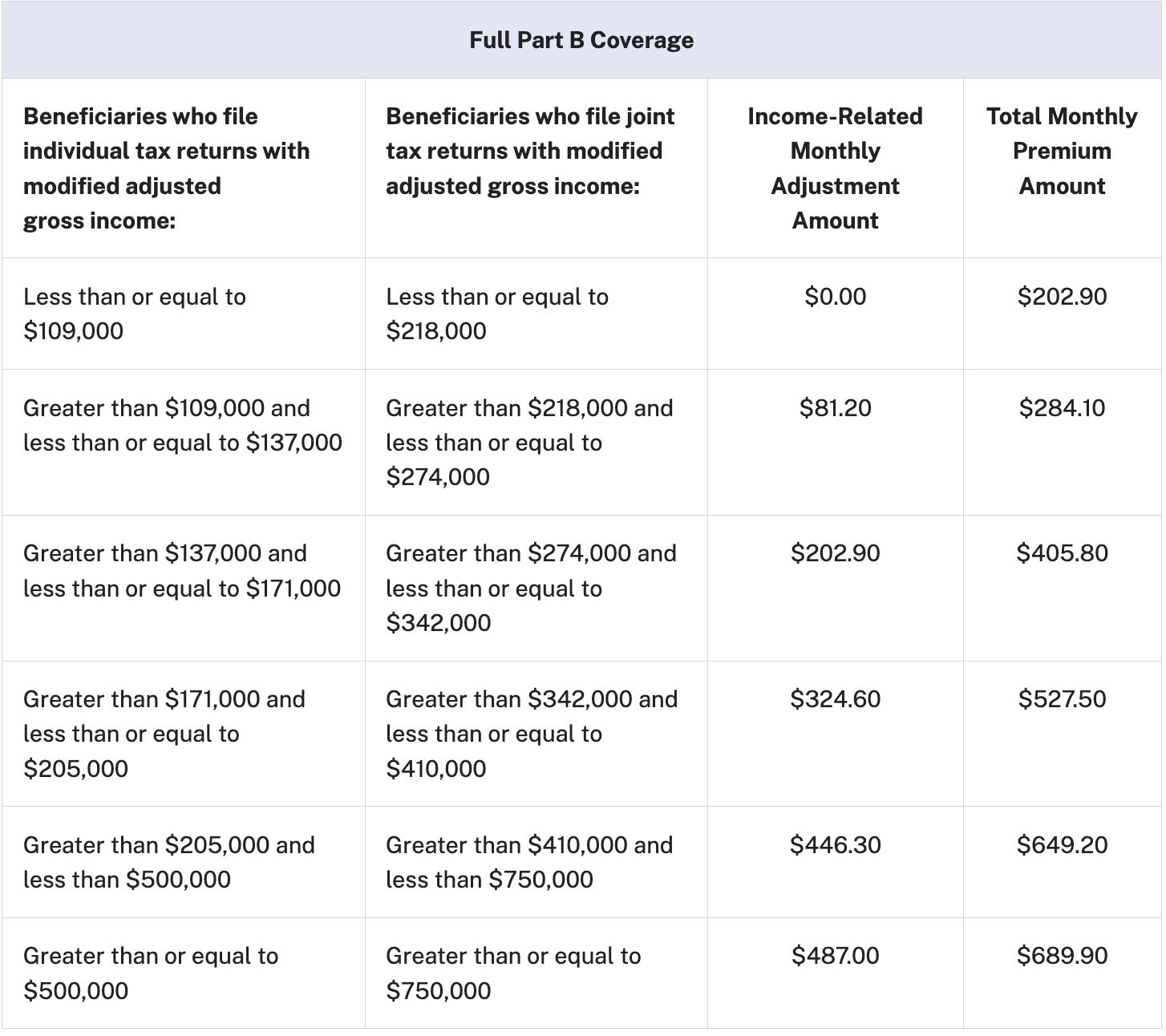
If your modified adjusted gross income (MAGI) exceeds certain limits, you pay higher premiums in addition to the standard Part B or Part D premium.
If you are married and file a joint return , you may still be subject to a higher premium even if your income is lower than the individual limit.
If you decide to stay on your spouses credible employer insurance, you may not want to sign up for Part B based on the IRMAA limits
Part B - IRMAA 2026